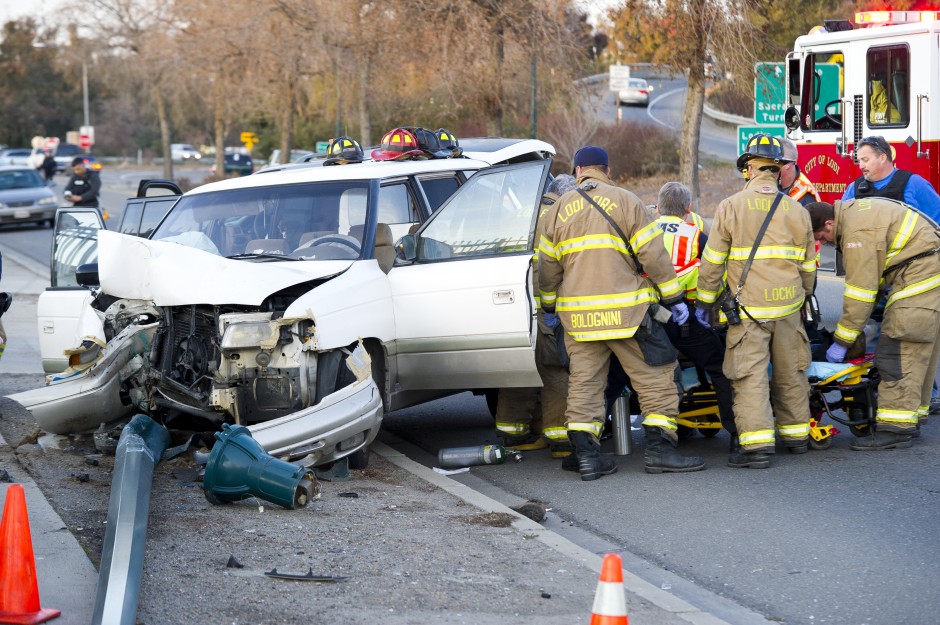
 My older readers may remember this slogan as a part of an anti drug campaign in the 1960’s. It is also true as it applies to automobile accidents. I would modify it to read as “Speed kills and maims”. Increased speed increases stopping time and stopping distances. Increased speed increases the likelihood of serious personal injury and death. Did you know that as a driver doubles the cars speed, the driver quadruples the stopping distance of the car. A drivers reaction time is generally thought to be between 1 second and two seconds depending on the facts of the event. This means that a driver traveling 35 miles per hour will have between one and two seconds to recognize a hazard and react to that hazard, hit the brakes and take evasive action. A car travelling 35 mph is travelling approximately 51 feet per second. This the driver will travel between 51 and 102 feet before they can do anything to avoid a collision. Now take a car going seventy miles per hour. That car is travelling 102 feet per second and will travel 204 feet before the drive even touches the brakes. When the driver does hit the brakes it will take the car four times the distance to stop as the car travelling 35 miles per hour.
So you can see that traveling faster raises the chances of not being able to see a hazard. It increases the distance the car will travel while the driver reacts and it increases the amount of distance a car will travel after the driver reacts. All of this increases the likelihood that a car crash will occur, where if the car was being at a safe slower speed, the crash will likely not occur. If you have to be somewhere at a certain time, give yourself plenty of time to get there. If you have teenagers talk to them all the time about the fact that speed kills. I know teenagers can be hard to talk to but they do listen and some of what you say will sink in. Thanks for listening.